

• Home
  • About
    • Workforce Cultural Capability Snapshot
    • Aboriginal Cultural Awareness for Workplaces
    • Respectful Workplaces
  • Blog
  • Contact
Menu

Blakworks

Street Address
City, State, Zip
Phone Number
Aboriginal Employment & Workplace Specialist

Your Custom Text Here

Blakworks

  • Home
  • About
  • Work with me
    • Workforce Cultural Capability Snapshot
    • Aboriginal Cultural Awareness for Workplaces
    • Respectful Workplaces
  • Blog
  • Contact

Why Smart Organisations Tailor Their Acknowledgements of Country

May 12, 2018 Lindsay Stanford
Does your Acknowledgement fit the event?

Does your Acknowledgement fit the event?

“A big special event deserves a big, prepared Acknowledgement. While a regular monthly meeting doesn’t need something spectacular, at least, not every time.”

Many organisations use an Acknowledgement of Country at the beginnings of meetings, or other events.  Often it is a stock-standard Acknowledgement that is used in these meetings. And, I applaud this.  Certainly, if your organisation is getting used to following these traditional customs then any reasonable attempt of any reasonable wording is a fabulous start.

Having a stock-standard Acknowledgement for every occasion is a great way to embed the practice into your organisation as it makes it familiar and easy to remember. A stock-standard Acknowledgement is often short and sweet. It gets the job done. Every time. It's a good thing. It's a clear signal that this is important.

Here's an example of my stock-standard Acknowledgement of Country I use on a regular basis. Chances are, if you've seen me do an Acknowledgement of Country, it was this one.

“I wish to acknowledge the Traditional Custodians of the lands on which we meet today. I pay my respects to the Elders past, present and future, and recognise their continuing connection and contribution to this land and these waters. I extend this respect to any Aboriginal people who are here today.”

However, if you've been delivering an Acknowledgement of Country for any length of time you may want to step up your game. If, for example, you have the opportunity to deliver an Acknowledgement to a new or larger audience you might want something that stands out. If it's a rare event you may want to deliver something more special. Or perhaps you're kicking off your Aboriginal employment or Reconciliation journey and you want to capture the hearts and minds of your audience or workforce. In all of these cases, and many others, you can broaden your Acknowledgement of Country. You can tailor it to the occasion.

A tailored Acknowledgement of Country for special events can draw attention to Aboriginal people, families, communities, cultures, experience as well as the event's theme. Some examples of when you may want to use a made-to-measure or special Acknowledgement of Country:

  • Launch of your organisation's Reconciliation Action Plan

  • Days of National importance such as ANZAC Day

  • To recognise the national NAIDOC Week theme "Because of her, we can"

  • A special acknowledgement to brand your organisation as a worthy employer of Aboriginal people

A big special event deserves a big, prepared Acknowledgement.  While a regular monthly meeting doesn't need something spectacular, at least, not every time.

When I work with my clients, I give them the choice between introducing a stock-standard Acknowledgement of Country, or developing a special branded Acknowledgement that has special meaning for their organisation and their vision. Many organisations want to develop a unique Acknowledgement of Country as a signal of their commitment to Aboriginal employment and Aboriginal communities.  They often want to draw attention to how their values drive them to serve Aboriginal people and communities.  They want to send a strong clear signal that we are important. They want us to know that Aboriginal people, families and communities matter, and have a place in their services and workplaces. They want us to know that we can have success alongside them.

I was recently asked to do an Acknowledgement of Country for a local International Women's Day event at Ourimbah campus of University of Newcastle. A group of women (and one man) gathered to hear speakers from the "All About Women" event in Sydney which was live streamed to a lecture theatre. I saw this as an ideal situation to draw attention to the strength of Aboriginal women in my communities, and so I prepared a distinct Acknowledgement of Country to do this.  It's brief, it's to the point, but I think it does what I intended.  What do you think?

“Good afternoon. My name is Lindsay Stanford and I am a proud Gamilaraay woman, which means I’m an Aboriginal woman from far north NSW.

And today I’ve been asked to provide an Acknowledgement of Land to kick off these proceedings.

Before I do, tell me, how many of you came here today to hear from strong successful women? Is that what you’re here for?

What’s interesting to me is that we know, perhaps because we’re women, that strength isn’t about success. Don’t we? Sure, success needs a measure of strength, but I think we know that our strength is most evident, not in our successes, but in our struggles.

And, struggle isn’t just about starting from nothing. It’s about facing seemingly insurmountable obstacles, knowing that others are expecting you to fail, and perhaps would rather it - but turning up and trying anyway. Again and again. Because we show our strength not just in the overcoming of our struggles, but in the struggle itself.

Now, I put it to you that there are few women in this country who know struggle like Aboriginal women.

I made the Central Coast my home 5 years ago. I am proud to be a member of an Aboriginal community with so many strong, clever, dedicated, brave women who work tirelessly to make our communities better - I couldn’t possibly name them all. Any attempt would be futile and ultimately dishonour whoever I failed to mention.

Instead I’m asking you to join with me today in Acknowledging the Traditional Custodians of the land on which we stand. To pay our respects to Elders, past present and future, particularly our women, and recognise their continuing connection and contribution to this land, these waters, and our communities.

I extend this respect to all Aboriginal women here today. And ask you to do the same, because if you came here to hear from strong women, that would be an excellent place to start.

Thank you and enjoy your afternoon.”
Lindsay Stanford giving an Acknowledgement of Country, calling for recognition of the strength of Aboriginal women at an International Women's Day event in March 2018.

Lindsay Stanford giving an Acknowledgement of Country, calling for recognition of the strength of Aboriginal women at an International Women's Day event in March 2018.

So, that's one example of an Acknowledgement of Country that has been tailored to the occasion.

Have you ever delivered an Acknowledgement that went beyond the stock-standard?  Was it branded for your organisation? Or was it for a special occasion? What occasions could you do a special Acknowledgement? What organisation values could you highlight in your next Acknowledgement of Country?

If you’d like to learn more you can download my Quick Workplace Guide to Welcomes to Country and Acknowledgements of Country by clicking the button below.

Download the guide

If you’d like to receive updates from Blakworks, including notifications when a new blog article goes live, click the button below.
Sign up for updates

Read More...
Best Practices for Addressing Racism: Why Non-Indigenous Feedback Isn’t Enough

Racism in the workplace can manifest in subtle ways, and the impact on Aboriginal employees and clients can be profound. One common pitfall is when non-Indigenous people turn to their non-Indigenous peers to validate their response to feedback on racist behaviours. This creates harmful feedback loops, where lived experiences are ignored, and harmful behaviours are reinforced.

To foster a culturally safe workplace, organisations need to prioritise the voices of those directly affected by racism and seek guidance from Aboriginal staff or cultural experts. By listening, learning, and taking action based on the perspectives of those with lived experience, organisations can break the cycle of harm and build a more inclusive and respectful environment.

If your organisation is serious about creating a culturally safe workplace, understanding these feedback dynamics is essential.

Read more →
Proofreading Your Workplace: How Cultural Capability Prevents Harm

Most people wouldn’t send a report without proofreading it, so why ignore the cultural capability of your workplace? Small mistakes in how we talk about and engage with Aboriginal people may seem harmless, but they can cause real harm and create unsafe environments. Just like with grammar, cultural capability requires continuous learning and a commitment to getting it right. In this article, I explore why every organisation needs a ‘proofreader’ for their cultural capability and how this can build safer, more respectful workplaces for Aboriginal people.

Read more →
Beliefs that could have led to a Yes vote: Lessons from the 2023 Referendum

Almost a year on, the 2023 referendum on the Aboriginal and Torres Strait Islander Voice to Parliament is still a topic worth revisiting—not to analyse why people voted one way or another, but to explore what beliefs might have led to a different result. Imagine if the message had truly resonated. What values would have inspired a ‘Yes’ vote, and what can leaders learn from this for their own workplaces? In this article, I break down the beliefs that could have shifted the outcome and show how these same values can help build safer, more respectful workplaces.

Read the full article to find out what those beliefs are and how they can shape change in your organisation.

Read more →
Mentoring Aboriginal Staff: How to Avoid Gaslighting and Be a Better Ally

When a young Aboriginal woman told her non-Indigenous mentor that her employer was racist, his first reaction was to explain that they weren’t. This response is common—and problematic. It's called racial gaslighting: dismissing or undermining someone’s experience of racism. By listening without defensiveness, recognising lived experience as expertise, and questioning our own biases, we can avoid this pitfall. Becoming a better ally means standing with those facing discrimination, not explaining it away. If you’re serious about building a safer and more respectful workplace, it starts with listening deeply and challenging your own assumptions.

Read more →
Expanding the Understanding of Aboriginal Employment

When people think of Aboriginal employment, they often focus on recruitment and placement services. While these are important aspects, Aboriginal employment encompasses a much broader range of activities and strategies that go beyond simply filling jobs. People who work in Aboriginal employment could have experience in any or all of these areas. Understanding the full scope of Aboriginal employment can help organisations make a meaningful impact and create lasting change.

I've listed 16 areas that people might mean when they say Aboriginal employment.

Read more →
LinkedIn Article - 1280 x 720 - It's Not Just Culture Principle.png
The “It's Not Just Culture"​ Principle

I've developed a set of principles over more than 20 years working in Aboriginal employment. These principles form an important part of my Aboriginal employment philosophy.

This article series introduces you to two of my three of these principles.

My Three Principles:

  1. It's not me, it's you

  2. It's not just culture

  3. Look good, feel good, do good principle

This article covers the second principle.

I use these principles when working with clients to help guide their best intentions towards things that work. Each of my products has been designed with these principles in mind.

These principles will help you work out if what you're doing or planning to do with Aboriginal employment is going to get you where you want to be with Aboriginal employment.

Read more →
7D5EDEFB-9791-476C-B7B8-97B763B98484_1_201_a.jpeg
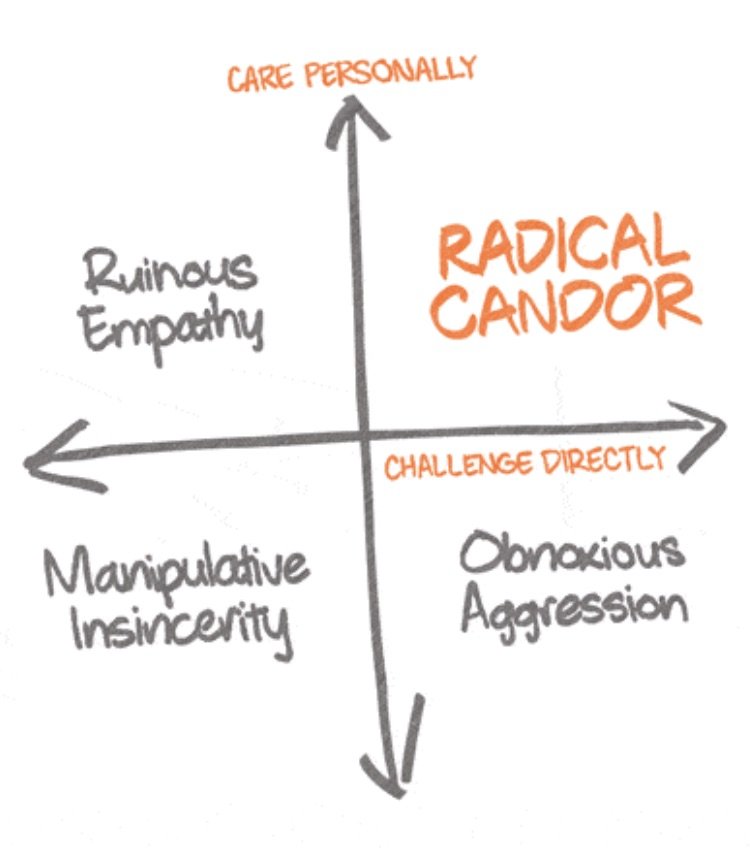
Reading Recommendation: Radical Candor by Kim Scott

The ideas in this book, Radical Candor, resonated strongly with me. As I read, I realised how relevant the core framework was to my work in Aboriginal employment.

I had a very clear idea in my mind what kind of supervisor was best, but no framework - and barely any language - for what it was.

Here’s a very quick introduction to the framework and how it applies to Aboriginal employment.

Read more →
February 2022 Blog - 3 ways to get internal support for Aboriginal employment and the one way that works.png
3 ways to get internal support for Aboriginal employment and the 1 way that works

Have you ever tried to get internal support for an Aboriginal employment program or initiative and failed?

Ever struggled to get your board, senior leaders, hiring managers, or staff to get on board with a important initiative?

You either can't find the message that works, or you can't get the message to the right person to make a decision. If you can't get support for an initiative, how can you expect it to succeed?

This article looks at why you need a strong rationale, three kinds of arguments you could use, and the most effective kind to use to bring staff on board.

Read more →
LinkedIn Article - 1280 x 720 - How do I find someone who can do a Welcome To Country in my area(1).png
How do I find someone who can do a Welcome To Country in my area?

Do you need to find someone who can deliver a Welcome to Country?

The below information is meant to be a starting point for you to identify and connect with Traditional Custodians in your area. It is not a comprehensive list, and may be updated from time to time.

It is important that you check whose country your meeting/event is being held.

Read more →
307184AC-73A3-4296-A8B6-A273FA1FB918_1_105_c.jpeg
We talk about Welcomes to 'Country' and Acknowledgements of 'Country', but what do we mean by 'Country'?

Over the last few years, so many workplaces have introduced Acknowledgements of Country. Rising community expectations to acknowledge Traditional Custodians and First Nations people have meant my most popular downloads and blog posts are about this modern take on a traditional custom.

But, what do we mean by ‘Country’?

Here's an explanation from Professor Mick Dodson OA.

Read more →
← An event without an Acknowledgement?!Tell me about your single biggest challenge with Aboriginal employment that you're struggling with right now... →

[-o-] Blakworks acknowledges the Traditional Custodians of the land on which we live and work. I pay my respects to the Elders past, present and future, and recognise their continuing connection and contribution to the land and waters. [-o-]


© Blakworks 2008-2026
Powered by Squarespace