

Hey there
Over the next coming weeks I want to do something a little different. I thought it would interesting (and fun?) to ask YOU about what you want to learn about Aboriginal employment.
If you can take just 5 minutes to tell me what your single biggest challenge that you're struggling with right now with Aboriginal employment. If you can take 30 seconds it would:
Mean the world to me
I'll be able to use that information to gear my upcoming posts and blog articles towards topics you specifically want to know more about
Click here to take the survey.
Thanks so much and enjoy your week.
Regards
Lindsay Stanford
Founder & Principal
If you’d like to receive updates from Blakworks, including notifications when a new blog article goes live, click the button below.
Racism in the workplace can manifest in subtle ways, and the impact on Aboriginal employees and clients can be profound. One common pitfall is when non-Indigenous people turn to their non-Indigenous peers to validate their response to feedback on racist behaviours. This creates harmful feedback loops, where lived experiences are ignored, and harmful behaviours are reinforced.
To foster a culturally safe workplace, organisations need to prioritise the voices of those directly affected by racism and seek guidance from Aboriginal staff or cultural experts. By listening, learning, and taking action based on the perspectives of those with lived experience, organisations can break the cycle of harm and build a more inclusive and respectful environment.
If your organisation is serious about creating a culturally safe workplace, understanding these feedback dynamics is essential.
Most people wouldn’t send a report without proofreading it, so why ignore the cultural capability of your workplace? Small mistakes in how we talk about and engage with Aboriginal people may seem harmless, but they can cause real harm and create unsafe environments. Just like with grammar, cultural capability requires continuous learning and a commitment to getting it right. In this article, I explore why every organisation needs a ‘proofreader’ for their cultural capability and how this can build safer, more respectful workplaces for Aboriginal people.
Almost a year on, the 2023 referendum on the Aboriginal and Torres Strait Islander Voice to Parliament is still a topic worth revisiting—not to analyse why people voted one way or another, but to explore what beliefs might have led to a different result. Imagine if the message had truly resonated. What values would have inspired a ‘Yes’ vote, and what can leaders learn from this for their own workplaces? In this article, I break down the beliefs that could have shifted the outcome and show how these same values can help build safer, more respectful workplaces.
Read the full article to find out what those beliefs are and how they can shape change in your organisation.
When a young Aboriginal woman told her non-Indigenous mentor that her employer was racist, his first reaction was to explain that they weren’t. This response is common—and problematic. It's called racial gaslighting: dismissing or undermining someone’s experience of racism. By listening without defensiveness, recognising lived experience as expertise, and questioning our own biases, we can avoid this pitfall. Becoming a better ally means standing with those facing discrimination, not explaining it away. If you’re serious about building a safer and more respectful workplace, it starts with listening deeply and challenging your own assumptions.
When people think of Aboriginal employment, they often focus on recruitment and placement services. While these are important aspects, Aboriginal employment encompasses a much broader range of activities and strategies that go beyond simply filling jobs. People who work in Aboriginal employment could have experience in any or all of these areas. Understanding the full scope of Aboriginal employment can help organisations make a meaningful impact and create lasting change.
I've listed 16 areas that people might mean when they say Aboriginal employment.
I've developed a set of principles over more than 20 years working in Aboriginal employment. These principles form an important part of my Aboriginal employment philosophy.
This article series introduces you to two of my three of these principles.
My Three Principles:
It's not me, it's you
It's not just culture
Look good, feel good, do good principle
This article covers the second principle.
I use these principles when working with clients to help guide their best intentions towards things that work. Each of my products has been designed with these principles in mind.
These principles will help you work out if what you're doing or planning to do with Aboriginal employment is going to get you where you want to be with Aboriginal employment.
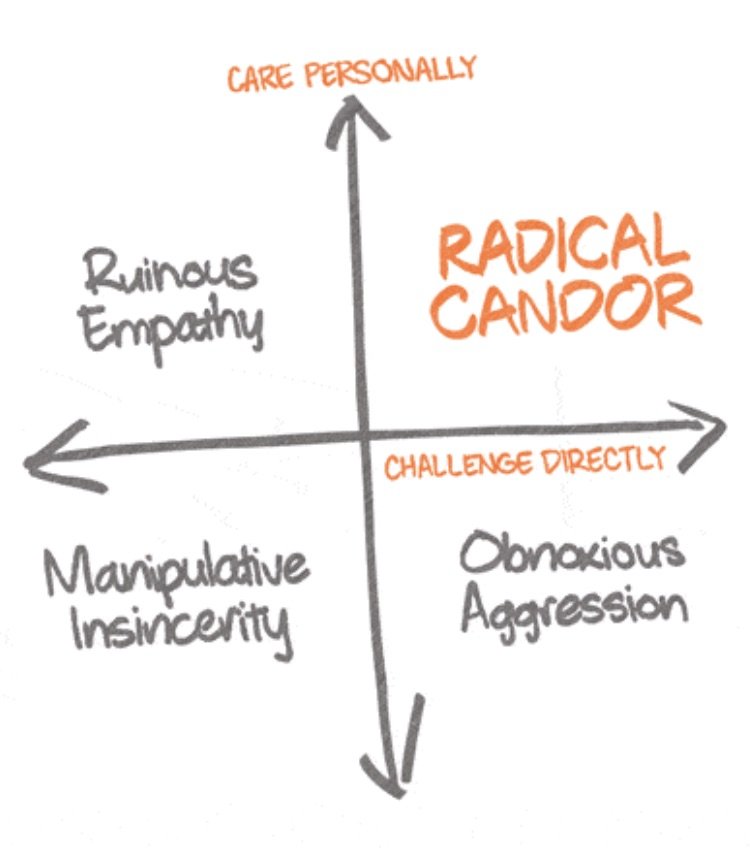
The ideas in this book, Radical Candor, resonated strongly with me. As I read, I realised how relevant the core framework was to my work in Aboriginal employment.
I had a very clear idea in my mind what kind of supervisor was best, but no framework - and barely any language - for what it was.
Here’s a very quick introduction to the framework and how it applies to Aboriginal employment.

Have you ever tried to get internal support for an Aboriginal employment program or initiative and failed?
Ever struggled to get your board, senior leaders, hiring managers, or staff to get on board with a important initiative?
You either can't find the message that works, or you can't get the message to the right person to make a decision. If you can't get support for an initiative, how can you expect it to succeed?
This article looks at why you need a strong rationale, three kinds of arguments you could use, and the most effective kind to use to bring staff on board.

Do you need to find someone who can deliver a Welcome to Country?
The below information is meant to be a starting point for you to identify and connect with Traditional Custodians in your area. It is not a comprehensive list, and may be updated from time to time.
It is important that you check whose country your meeting/event is being held.

Over the last few years, so many workplaces have introduced Acknowledgements of Country. Rising community expectations to acknowledge Traditional Custodians and First Nations people have meant my most popular downloads and blog posts are about this modern take on a traditional custom.
But, what do we mean by ‘Country’?
Here's an explanation from Professor Mick Dodson OA.